Overtime Management
Managing the overtime of your agency can be a juggling act. We will help make sense of your agency's overtime with our logic-driven, rules-based software that does the heavy lifting for you.
Overtime requests
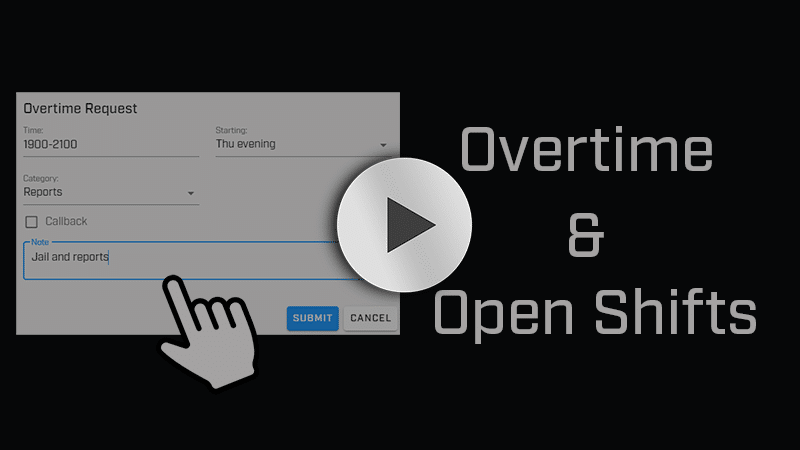
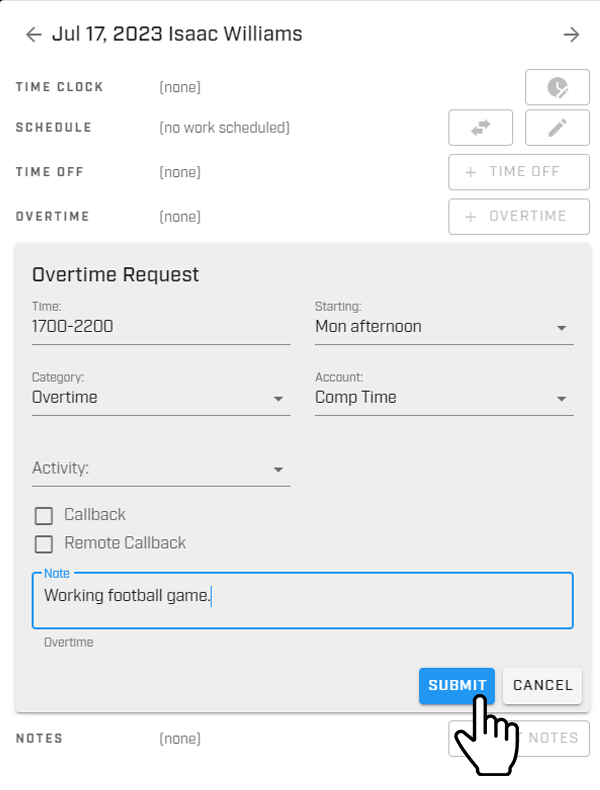
Employees, supervisors and administrators can enter overtime requests. This is done by clicking Add Overtime Request.
The overtime request allows you to enter a time span, overtime category, accrual account, activity, and notes. The callback checkbox can be selected for two hours callback. The note added to the request can be set as required or optional, configured per overtime category.
Requests can be withdrawn at any time.
Overtime approval
Approve Requests area
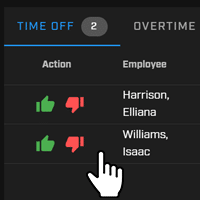
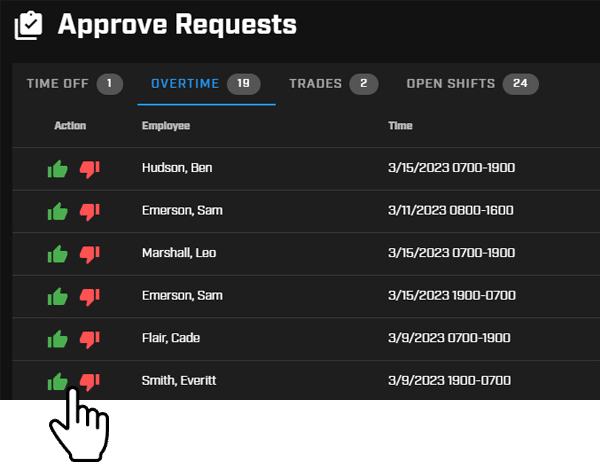
The dedicated tab on the Approve Requests screen allows you to approve all overtime requests in one place.
Requests can be approved or rejected by supervisors. When you reject a request, it will prompt you to add an optional note on why the request was rejected.
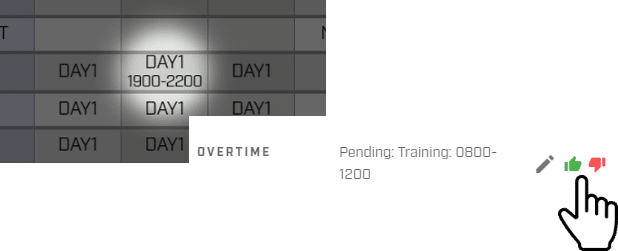
Main Schedule area
Approvals can also be done in the Main Schedule View by clicking on the day cell. Supervisors simply approve or edit the overtime request.
Pending requests will be displayed with a yellow background on the Main Schedule View.
View overtime reports
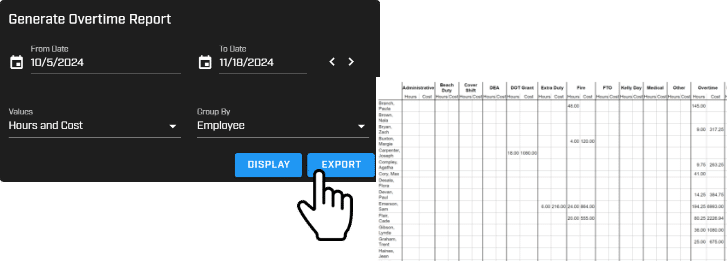
Overtime hours and costs to your agency can be viewed in Overtime Reports. Select a date range, select cost/hours/cost+hours, and grouping. You can display the report on your web browser, or download a spreadsheet.
The power of overtime categories
The overtime categories in Hero Schedule allow you to keep your overtime organized because of the rules set in place. The rules allow you to specify which accrual account is being used, whether an activity is required or not, and other related settings.
These rules, categories, and activities can be customized for your agency. We will help you set this up.
Shift differentials
Overtime policies can be configured to give credit for work performed on specific dates, specific days of the week, or specific times of day. This supports the many kinds of shift differential policies agencies use. For example, a premium for overnight hours, a weekend differential, or additional credit for work on a holiday.
Because differentials are built into the overtime policy itself, the correct credit is applied automatically when the qualifying work occurs. You set the rule once, and Hero Schedule handles the calculation. This keeps your compensation rules consistent with agency policy and collective bargaining agreements without manual adjustment on each pay period.
Types of overtime categories
These are all customized according to your agency rules, but some standard categories include:
- Administrative
- Extra Duty
- General Overtime
- Training
- Reports
Each one of these categories has a predefined compensation rule when it is selected in the overtime approval area by an employee.
Flat Credit categories
Most overtime categories capture the actual time an employee works. A category can also be set as Flat Credit, which awards a set credit without requiring the employee to enter a time span. This is useful for categories where a fixed amount is granted rather than clocked hours, for example, certain training or duty credits. When a category is set to Flat Credit, the request skips the time-entry step entirely.
Accrual accounts keep track of accrued overtime
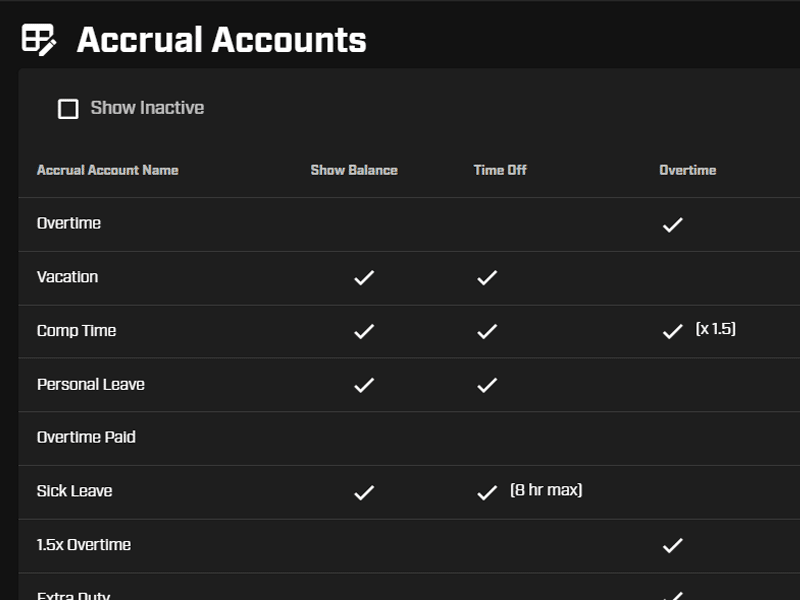
Accrual accounts such as vacation, sick, comp time, personal time and overtime are used to track employee hour balances.
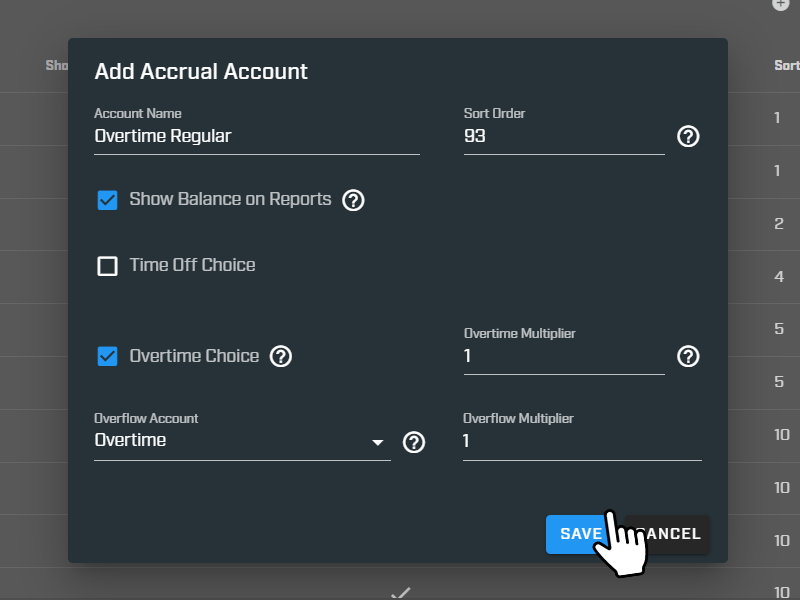
Specifically with overtime accounts, you are able to track and manage extra hours worked so employees are correctly compensated.
The settings in the overtime setup allow you to adjust our system to your employee policy.